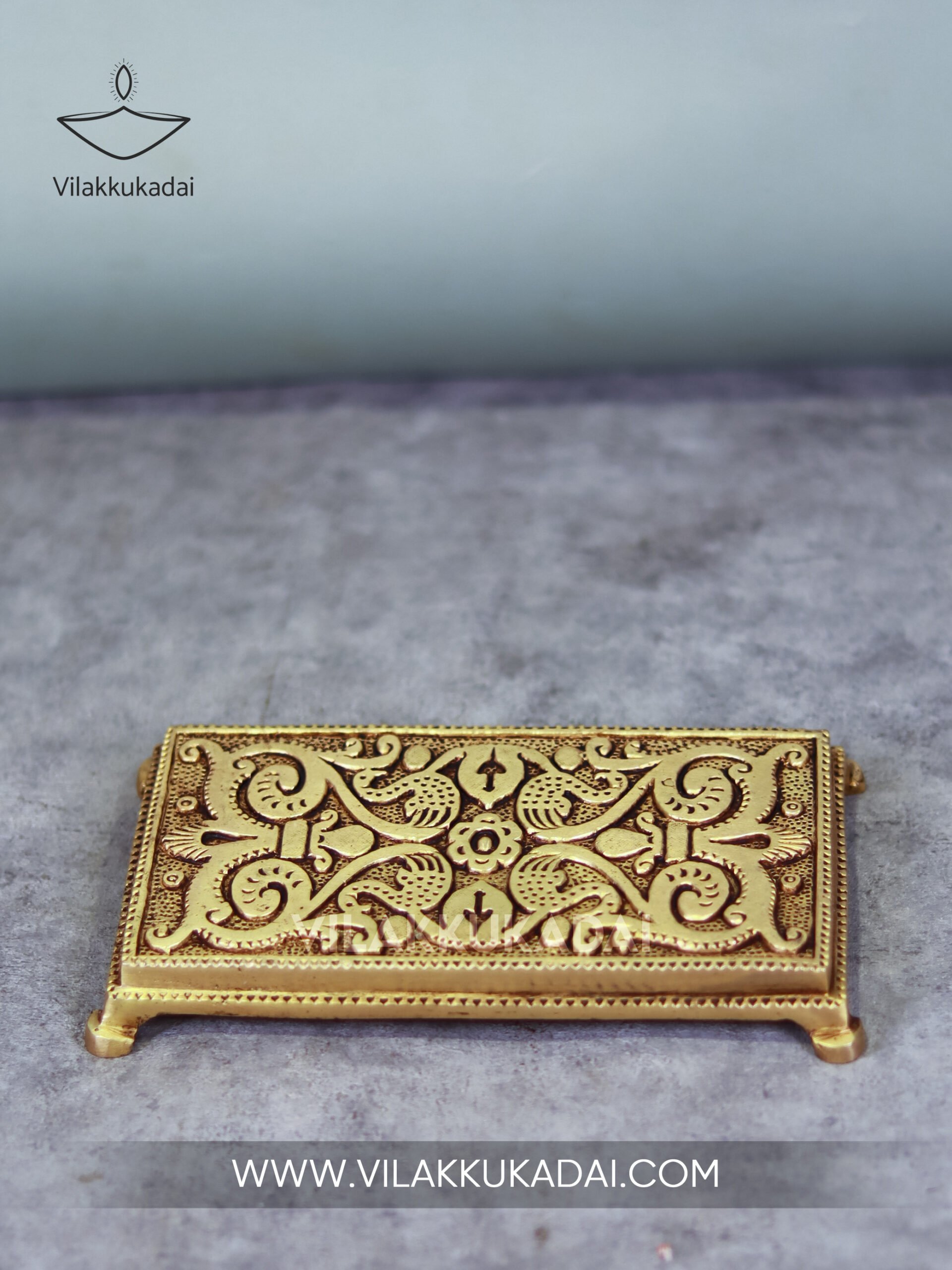
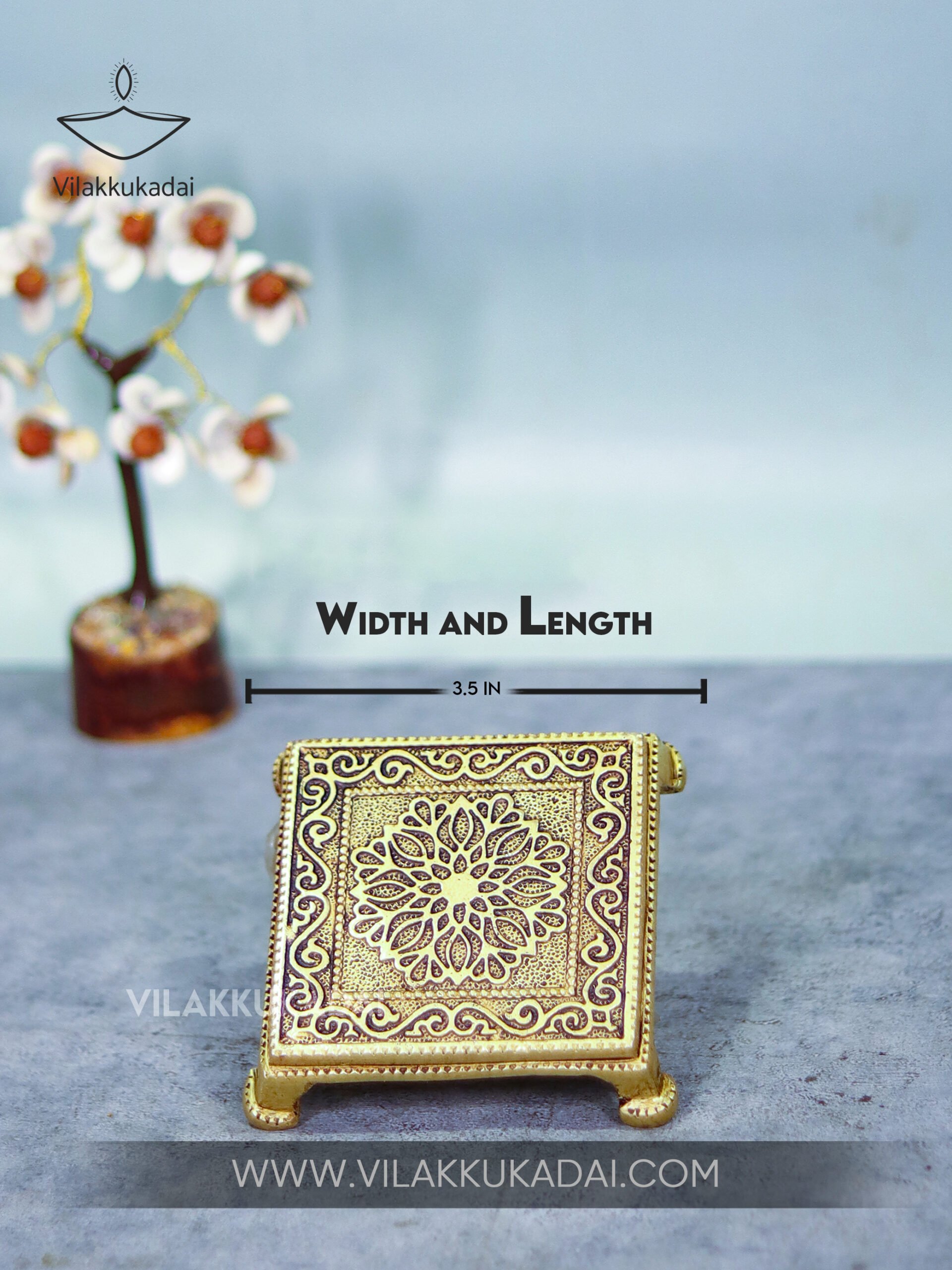
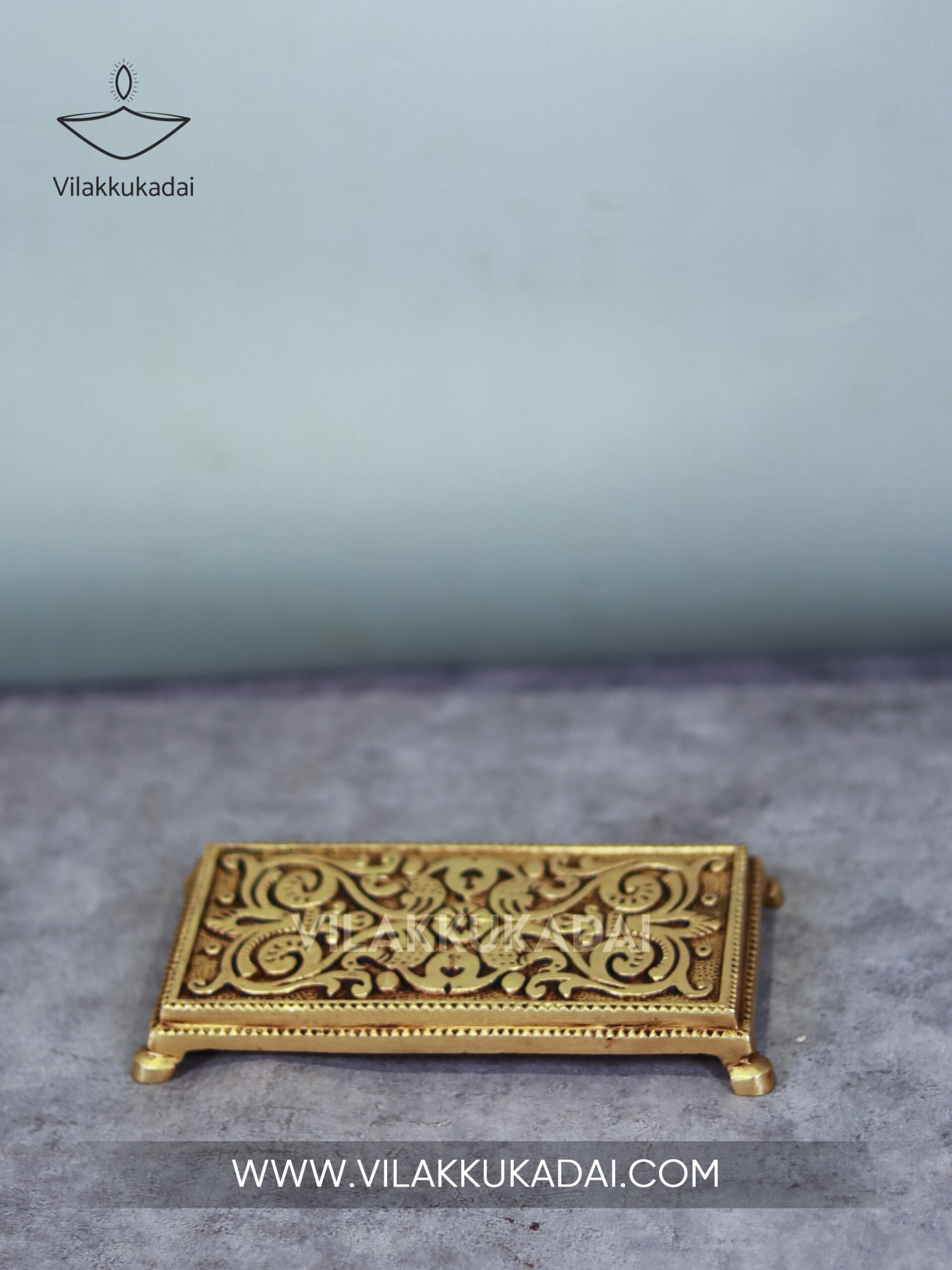
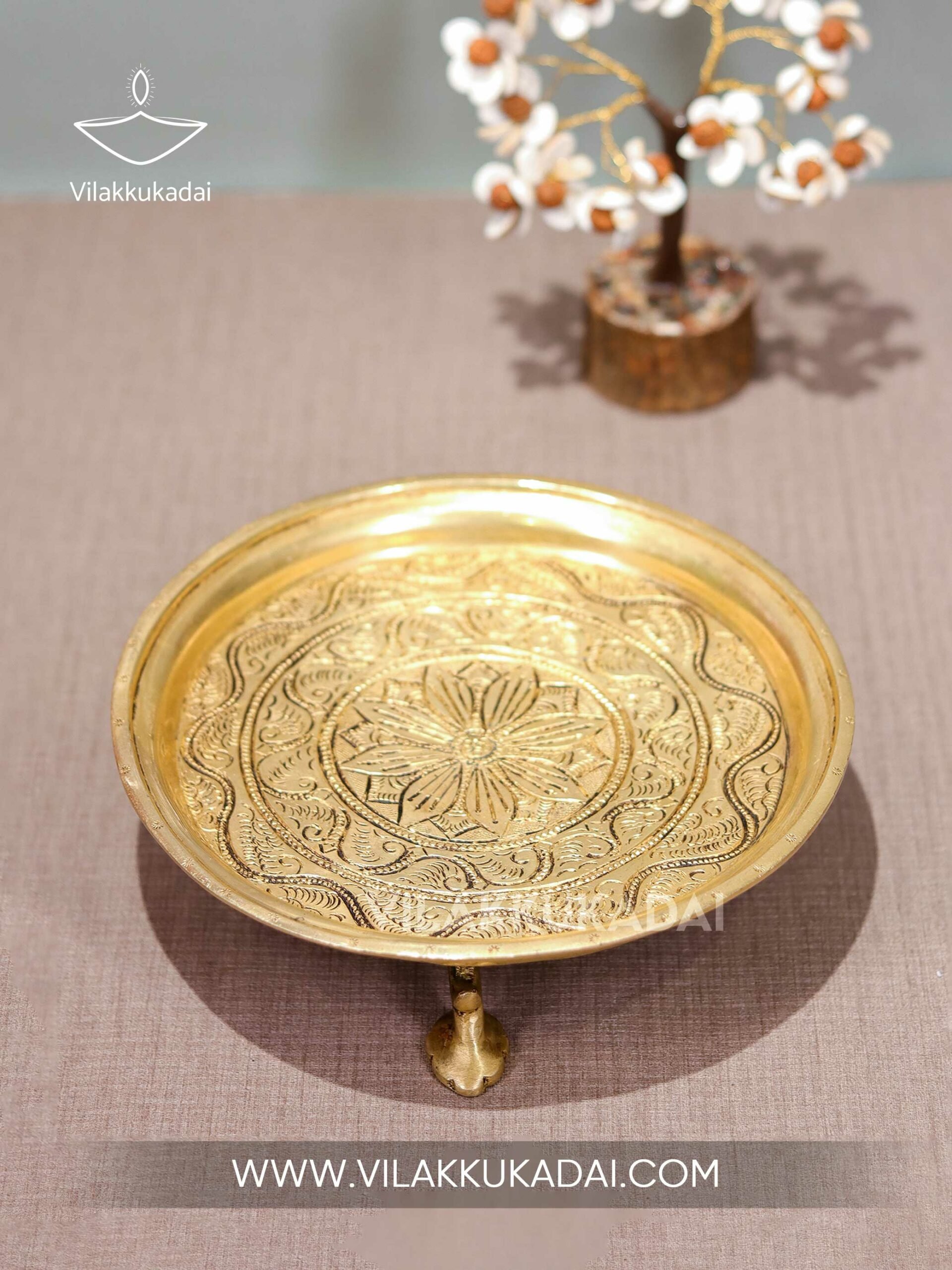
A decorative Thiruvachi Peedam is a sacred Indian altar piece, featuring an ornate arch (Thiruvachi/Prabhavali) symbolizing divine light, atop a sturdy base (Peedam) for idols or lamps, often brass or five-metal, with intricate carvings for home shrines. A Mandapam is a more elaborate, sometimes temple-style, structure or canopy for deities, also highly decorated, offering a grander setting for worship, sometimes featuring bells or ornate finishes. Thiruvachi Peedam (Arch & Base) What it is: A framed arch (Thiruvachi/Prabhavali) set on a solid base (Peedam). Design: Intricate traditional engravings, celestial motifs, often with a warm golden glow from brass or Panchaloha (five metals). Function: Frames the deity, symbolizing a cosmic aura or divine light, providing a stable, sacred spot for idols. Use: Home altars, pooja rooms, festive decorations for Diwali, Navaratri, etc.. Mandapam (Canopy/Shrine) What it is: A miniature temple-like structure, canopy, or ornate platform for deities. Design: Elaborate, featuring pillars, roofs, decorative bells, and rich finishes (e.g., rosewood), creating a grand setting. Function: A divine dwelling or elaborate stage for idols, enhancing the spiritual atmosphere of a larger pooja setup. Use: Larger home shrines, special religious ceremonies, or temple altars. Key Differences Thiruvachi Peedam: Focuses on framing a single deity with an aura, smaller scale, ideal for compact spaces. Mandapam: A miniature temple structure, offering a complete, grander enclosure for idols, often for bigger celebrations or permanent setups.